Four color theorem: potential criminal


Here is the tranformation of a potential criminal map into a rectangular map. All regular maps can be topologically trasformed into rectangular or circular maps. See the theorem in T2.
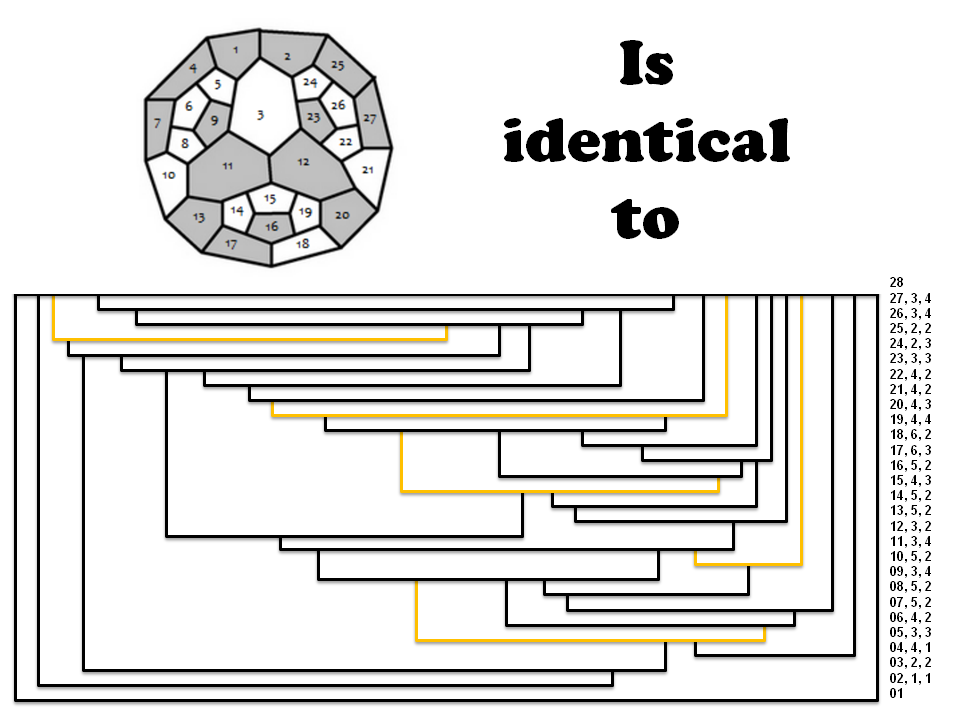
Faces 5, 10, 15, 20, 25 are marked with a different color to simplify the reading of the map.

The computerized and colored version can be found here: Conversion of famous maps.

The string that represents this map and that can be used with the Java application to recreate this map is:

1b+, 2b+, 25b+, 27b+, 26b-, 24b-, 3b-, 23b-, 12b-, 22b-, 21b-, 20b-, 19b-, 15b-, 16b-, 18b-, 17b-, 11b-, 9b-, 5b-, 6b-, 8b-, 7b-, 2e-, 3e-, 4b-, 5e-, 6e-, 9e-, 10b-, 8e-, 12e-, 14b-, 13b-, 11e-, 15e-, 16e-, 14e-, 19e-, 25e-, 24e-, 23e-, 26e-, 22e-, 27e+, 21e+, 20e+, 18e+, 17e+, 13e+, 10e+, 7e+, 4e+, 1e+

Here is a picture of this map with transparency set to 15%:
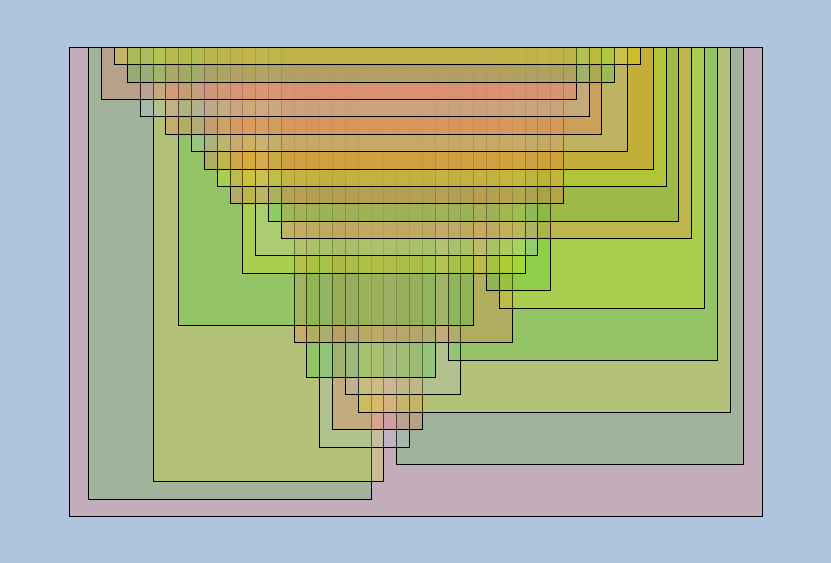
Tutte’s map


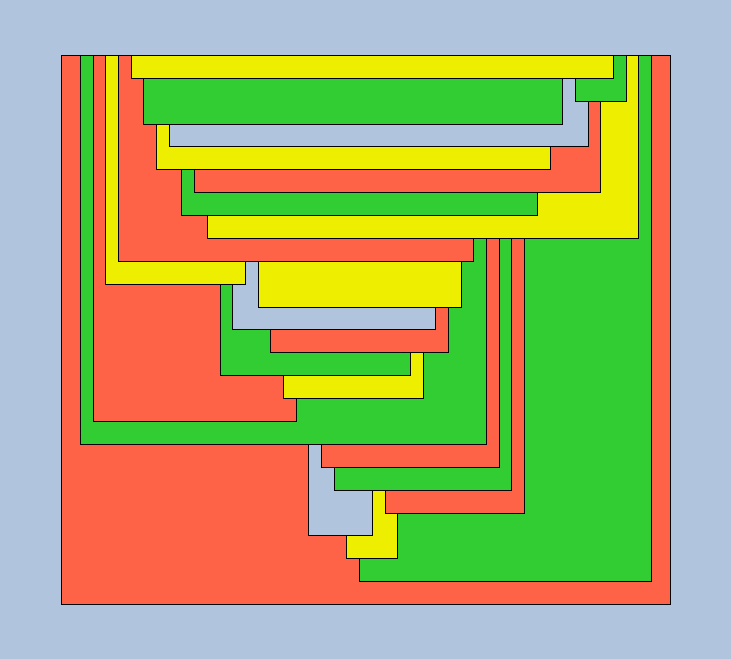
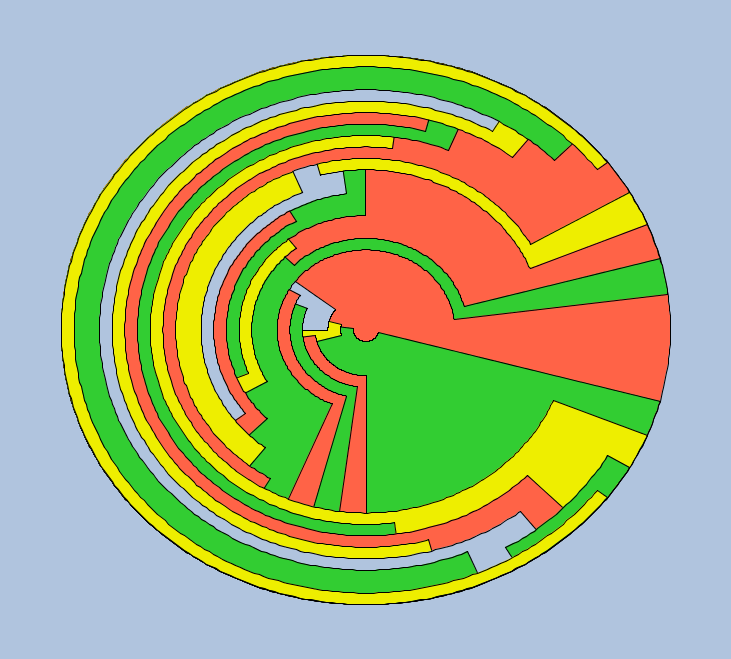
I corrected a mistake on Tutte’s map conversion. This one is the fixed version. Face number 25 surrounding all the other faces on the original map, is the ocean of the rectangular and circular maps.

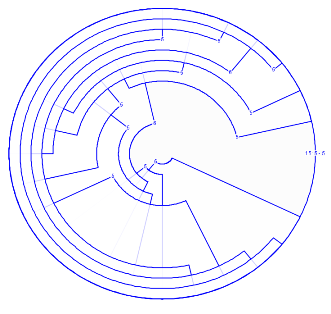
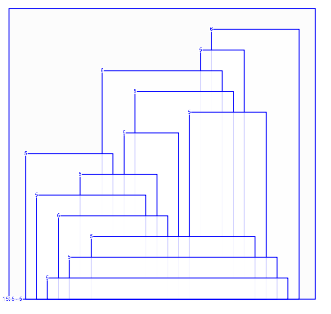
Same map converted into rectangular and circular (using different colors):


Tutte’s map conversion (1/2)


CORRECTED!

All regular maps can be topologically transformed into rectangular of circular maps (see T2).

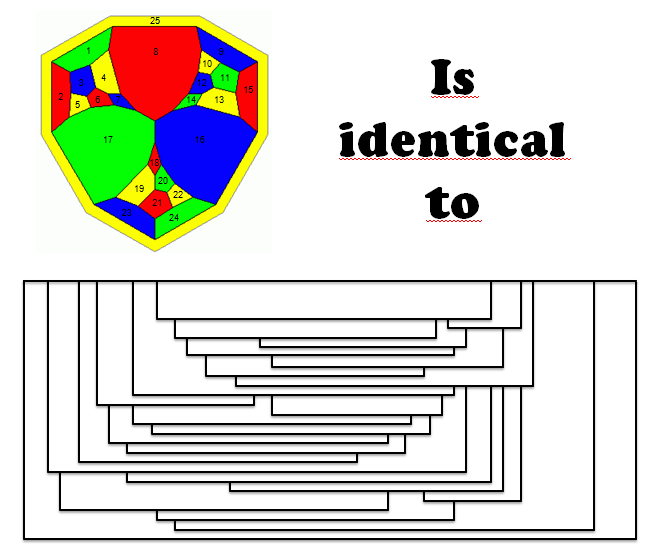
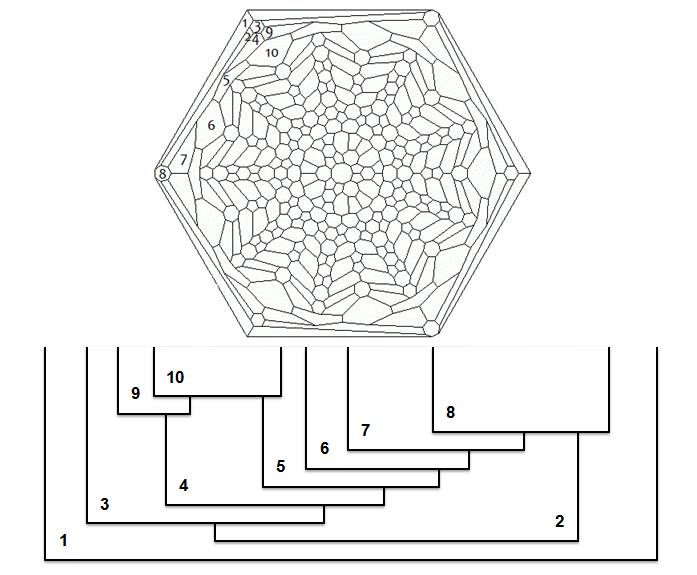
This is the conversion of Tutte’s map, made by hand, into a rectangular map. The colored and computerized version will follow.

These conversion are done just for fun and have not theoretical interest. The theorem in T2 proves that all regular maps (basically all maps of interest to the four color theorem) can be converted into circular of rectangular maps.

Tutte’s map on the left and the map made of rectangles right below it, are exacly the same map. Face number 25 correspond to the surrounding area (the ocean) of the rectangular map.

Just another site about the four color theorem?


The four color problem has already been proved by Kenneth Appel and Wolfgang Haken back in 1976 (http://en.wikipedia.org/wiki/Four_color_theorem). Since it was the first major problem that required a computer to be completed, many people are still trying to find a simple and elegant, human checkable, “pencil and paper” proof of the problem … if any.

The approach used here to solve the problem is based on two results which, I think (please, please, please verify), haven’t been considered so far.

  • Only maps with all faces with five or more edges can be considered when searching for a proof of the four color problem, as proved in T1 (T1 was already known by Kempe in the year 1879 – CORRECTED! 02/Apr/2011)
  • All regular maps, no matter the complexity, can be topologically transformed into “circular maps” or “rectangular maps”, as proved in T2

I would really like someone to verify that the approach I used so far is correct. In computer programming it is believed that is almost impossible to find errors if you are called to test your own software and this is not different for ideas. So please help!

If you like, try the application I created to generate circular and rectangular maps … and to color them automatically. The software can be found here:

From command line, just use the java command:

  • jar -jar ct-ui-swixml-VERSION-jar-with-dependencies.jar (no installation required)

Contact me for any help!