In this new version of the software you can manually color the edges of a map with three colors (RGB) and apply Kempe coloring switch on a Kempe edge chain (path or loop) (http://en.wikipedia.org/wiki/Kempe_chain).
In the new version of the software, isomorphic graphs are automatically removed while processing. This way the generation of all graphs/maps is a lot faster … not as plantri but faster than before.
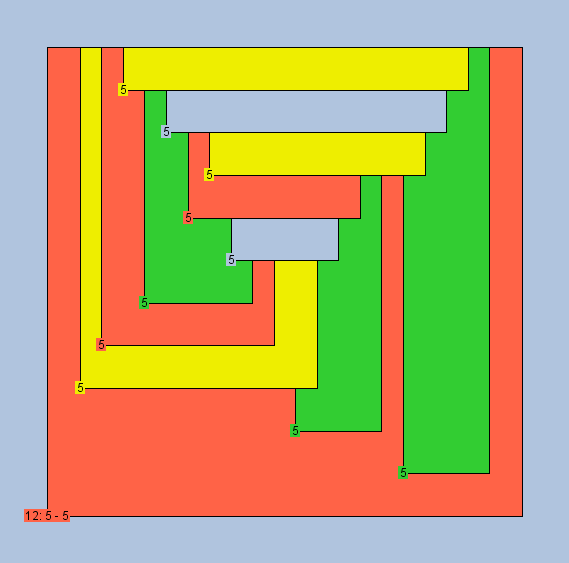
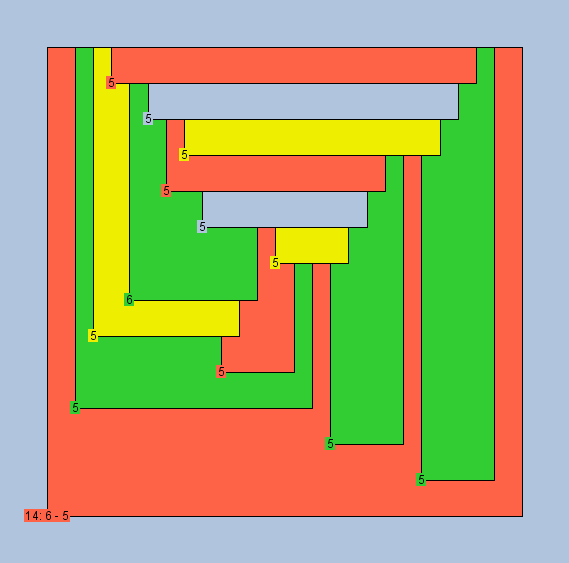
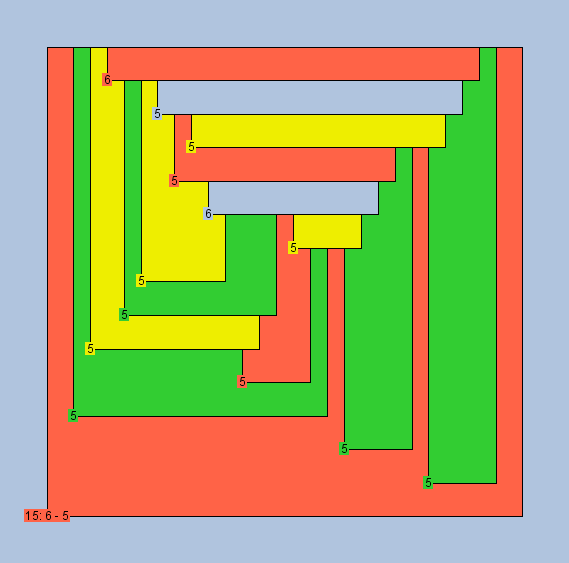
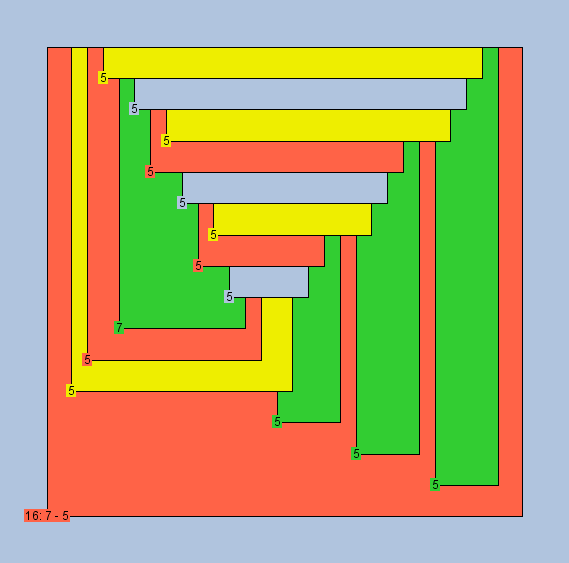
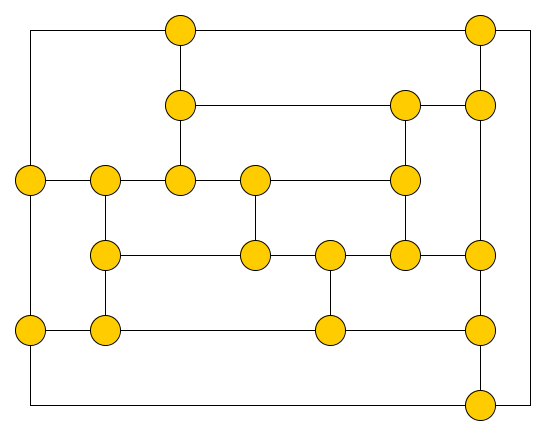
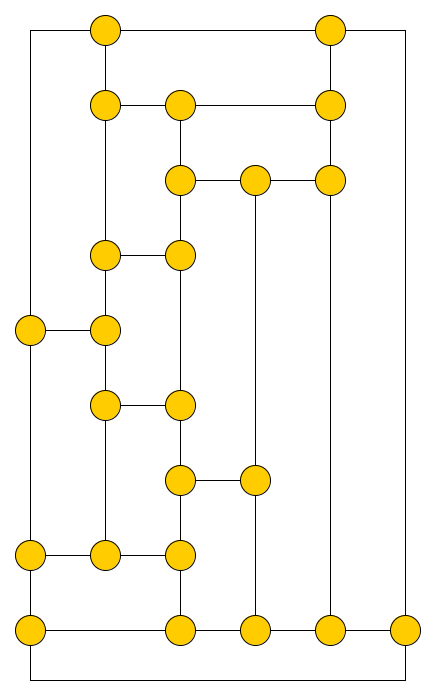
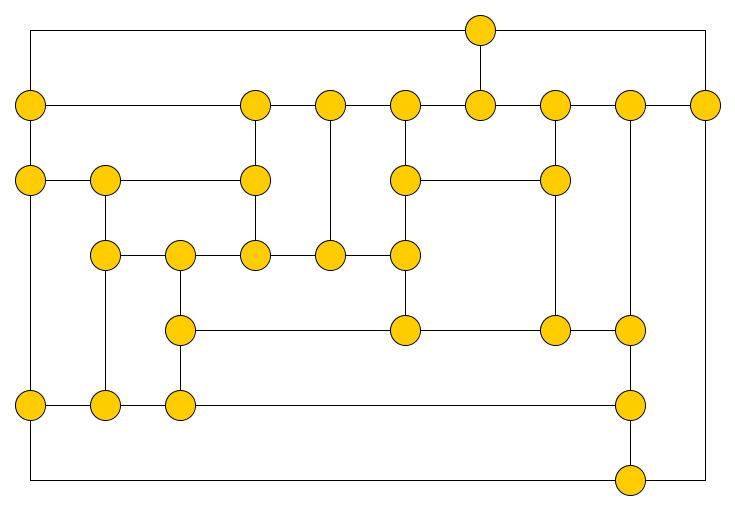
Analyzing all 3-regular graphs that have only faces with 5 edges or more (simplified), I empirically found (using a computer program) that many hypothetically possible graphs, that by Euler’s identity may exist (F5=12+F7+2F8+3F9+…), do not actually exist. Using a VF2 algorithm to filter out isomorphic maps, I also noticed that not so many graphs as I expected existed. And that one general category of graphs, that always represents a simplified 3-regular graph, is that of Fullerenes (with 12 faces F5 and an arbitrary number of F6). Here is a list of what I found, so far, for each class of graphs, from 12 faces to 20 faces (surrounding area included).
The question is: Since the computation of maps with 17, 18, 19, 20 faces (simplified and not containing isomorphic graphs) it is taking me very long time (days of CPU time on a PC), is this sequence already known?
Filter out duplicates. I finally found a java library to efficiently filter out all isomorphic graphs. It is a library part if the sspace project. Using it I will be able to test more complex simplified maps with lots of vertices … not risking to spend CPU time on duplicates
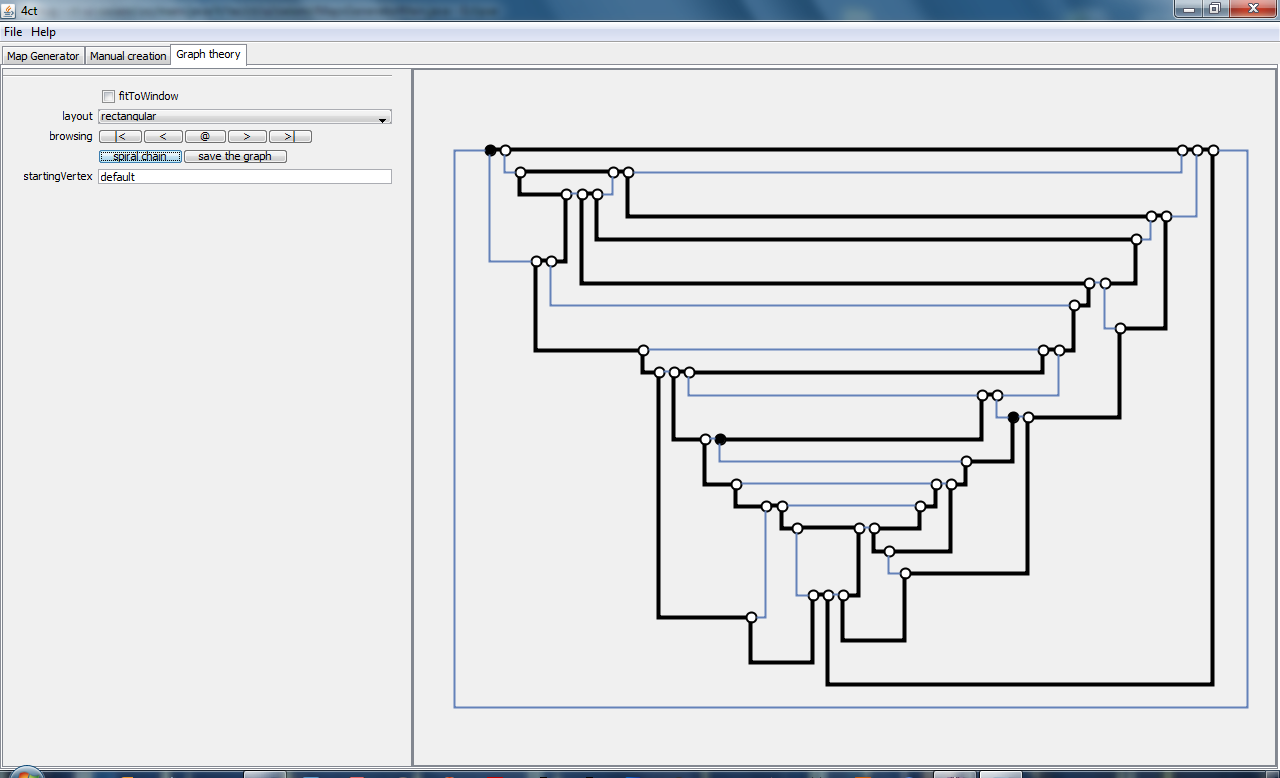
Finish the implementation of the Cahit algorithm to color the edges of a bridgeless cubic planar graph. I still need to well understand why Kempe’s chain color switching works using Cahit spiral chain method … especially when there is more than one spiral chain
Convert the swing application to javafx. This way I’ll be able to eliminate many third party dependencies: G, swixml, …
I’ve found some time to implement the first version of Cahit Spiral Chains algorithm.
I still need to:
Find all spiral chains of a given graph and not only one (changing the starting point)
I need to implement the concept of “nearest unused vertex to the last vertex of the last spiral chain”. This is needed to find the starting point of the next spiral <– DONE
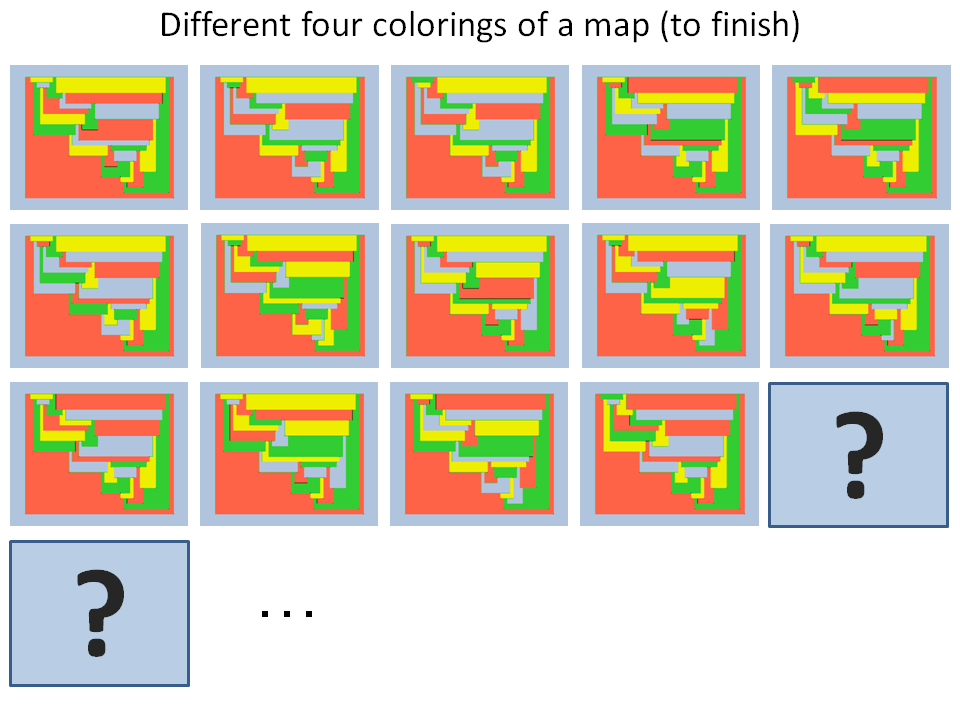
In terms of graph theory I’d like to find all four colorings of the vertices of a planar graph (the dual representing the map).
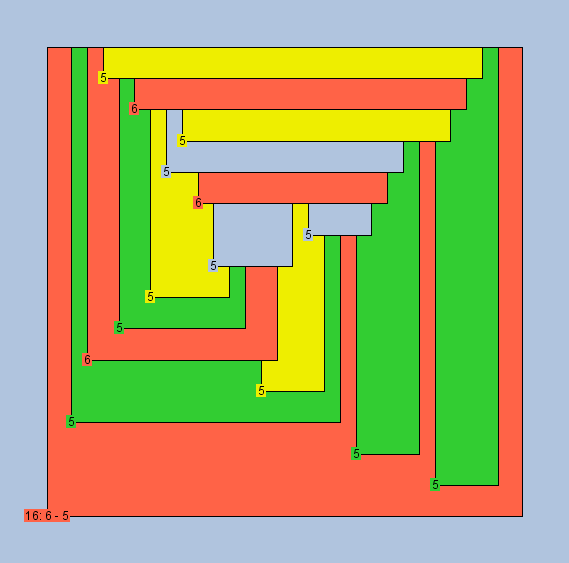
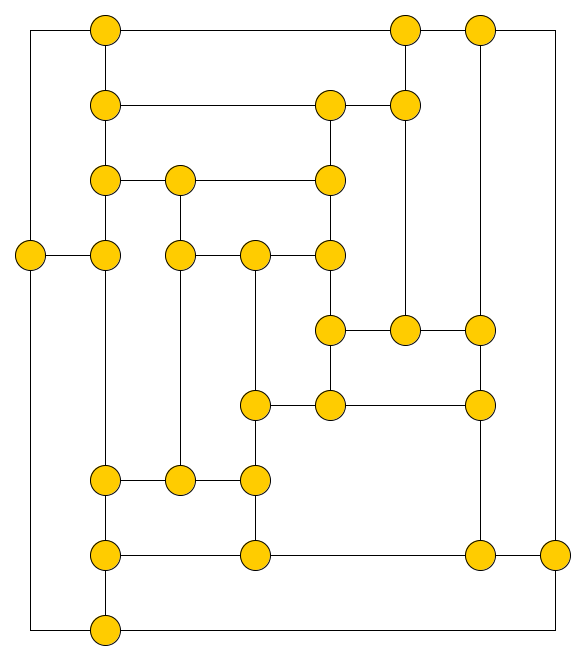
I’m interested in maps in which each face is an opaque rectangle layered on all previous rectangles, overlapping partially. Each consecutive rectangle starts at a consecutive y coordinate. The next picture should better clarify what I mean.
The faces are numbered from 1 to n
face 1 is the face on the bottom of the pile
face (n-1) is the face at the top
face n is the infinite face surrounding all others
For the meaning of different colorings you can refer to this question: mathoverflow.net
I was thinking to pre-set the colors of faces and use a classical brute force algorithm to get four coloring of the map. I already implemented the brute force algorithm to find the proper coloring of a map and I can also force the color of faces to find particolar colorings.
The problem is that I’m not coming up with an algorithm to do it automatically and to be sure to find ALL colorings.
To see what I have so far, you can watch this video on youtube:
!
What I know is that:
Since the colors of three neighbors faces can be arbitrary, face number n, face number 1 and the face touching both (face n and face 1), can have these fixed colors: blue, red, green
These translations have been taken from wikipedia, starting from http://en.wikipedia.org/wiki/Four_color_theorem. I was just curious to see if people search for the “four color theorem” only in english.
Teorema dei quattro colori
Problém čtyř barev
Firfarveproblemet
Vier-Farben-Satz
قضیه چهاررنگ
Théorème des quatre couleurs
Teorema das catro cores
משפט ארבעת הצבעים
Teorema de los cuatro colores
Dört renk teoremi
Kvarkolormapa teoremo
四色定理
ทฤษฎีบทสี่สี
Vierkleurenstelling
Négyszín-tétel
4색정리
चार रंग की प्रमेय
Problemo di quar kolori
Keturių spalvų teorema
Teorema celor patru culori
Проблема четырёх красок
…





 Four Color Theorem