Conversion of famous maps UPDATED
Original image taken from:
http://en.wikipedia.org/wiki/Four_color_theorem

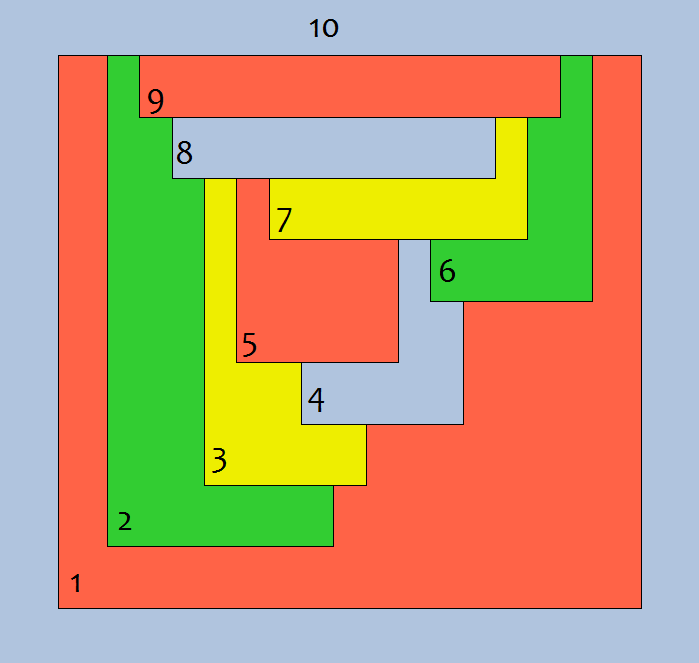
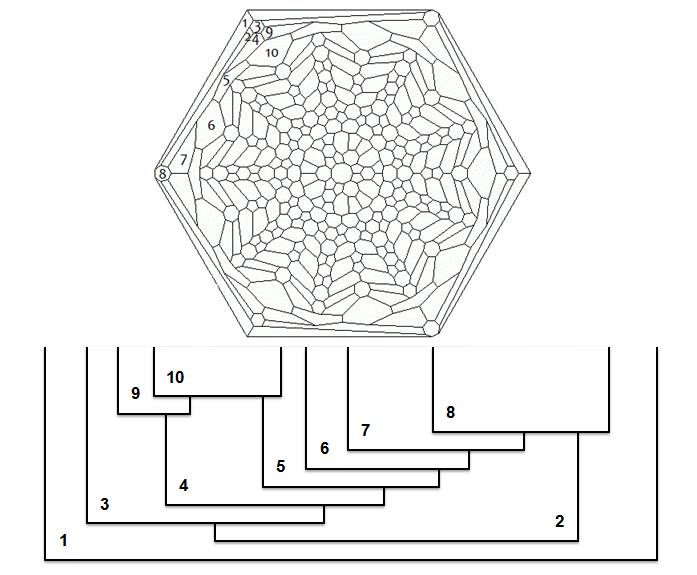
Same image converted into circular and rectangular (using different colors):
 |
|

Conversion of famous maps UPDATED
Original image taken from:
http://en.wikipedia.org/wiki/Four_color_theorem
Same image converted into circular and rectangular (using different colors):
|
|
I am converting some famous maps into rectangular maps. You can check some converted maps here: Conversion of famous maps.
First steps are explained here: First steps.
The four color problem has already been proved by Kenneth Appel and Wolfgang Haken back in 1976 (http://en.wikipedia.org/wiki/Four_color_theorem). Since it was the first major problem that required a computer to be completed, many people are still trying to find a simple and elegant, human checkable, “pencil and paper” proof of the problem … if any.
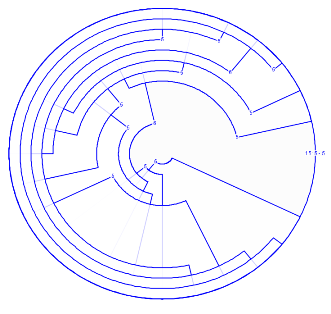
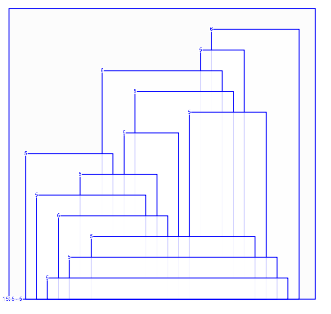
The approach used here to solve the problem is based on two results which, I think (please, please, please verify), haven’t been considered so far.
 |
 |
I would really like someone to verify that the approach I used so far is correct. In computer programming it is believed that is almost impossible to find errors if you are called to test your own software and this is not different for ideas. So please help!
If you like, try the application I created to generate circular and rectangular maps … and to color them automatically. The software can be found here:
From command line, just use the java command:
Contact me for any help!
I moved my Java project to: https://github.com/stefanutti/maps-coloring-java
Just started to transfer the content from the lyx (latex) document into this site. From now on the document can be considered obsolete.
Still trying to organize all menus and sub-menus:
Home, About maps, T1, T2, Searching for T0, Open points, Notes, Downloads, Sandbox
Just wandering around to decide what to do of this new wordpress site about the four color theorem.
 Four Color Theorem